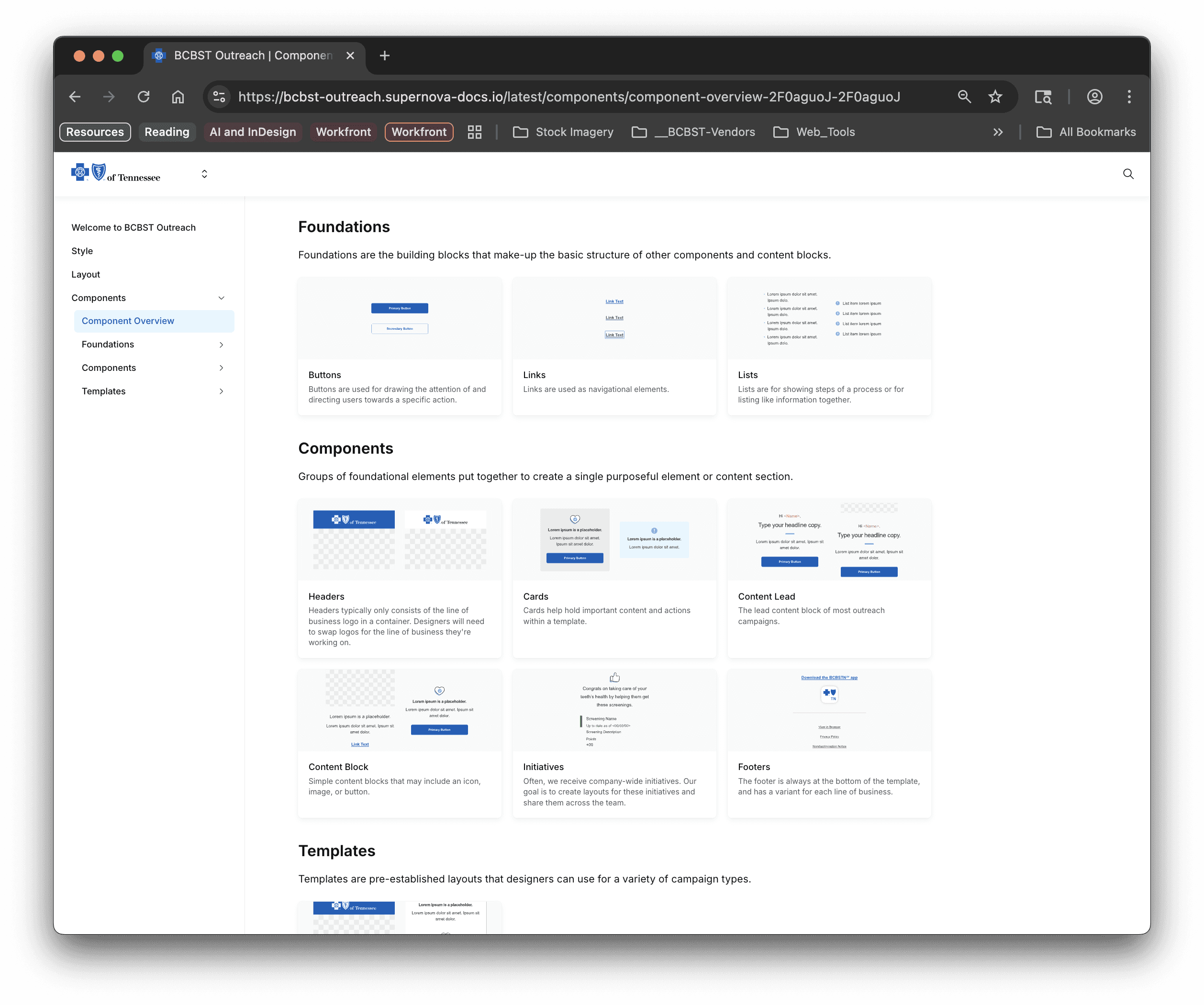
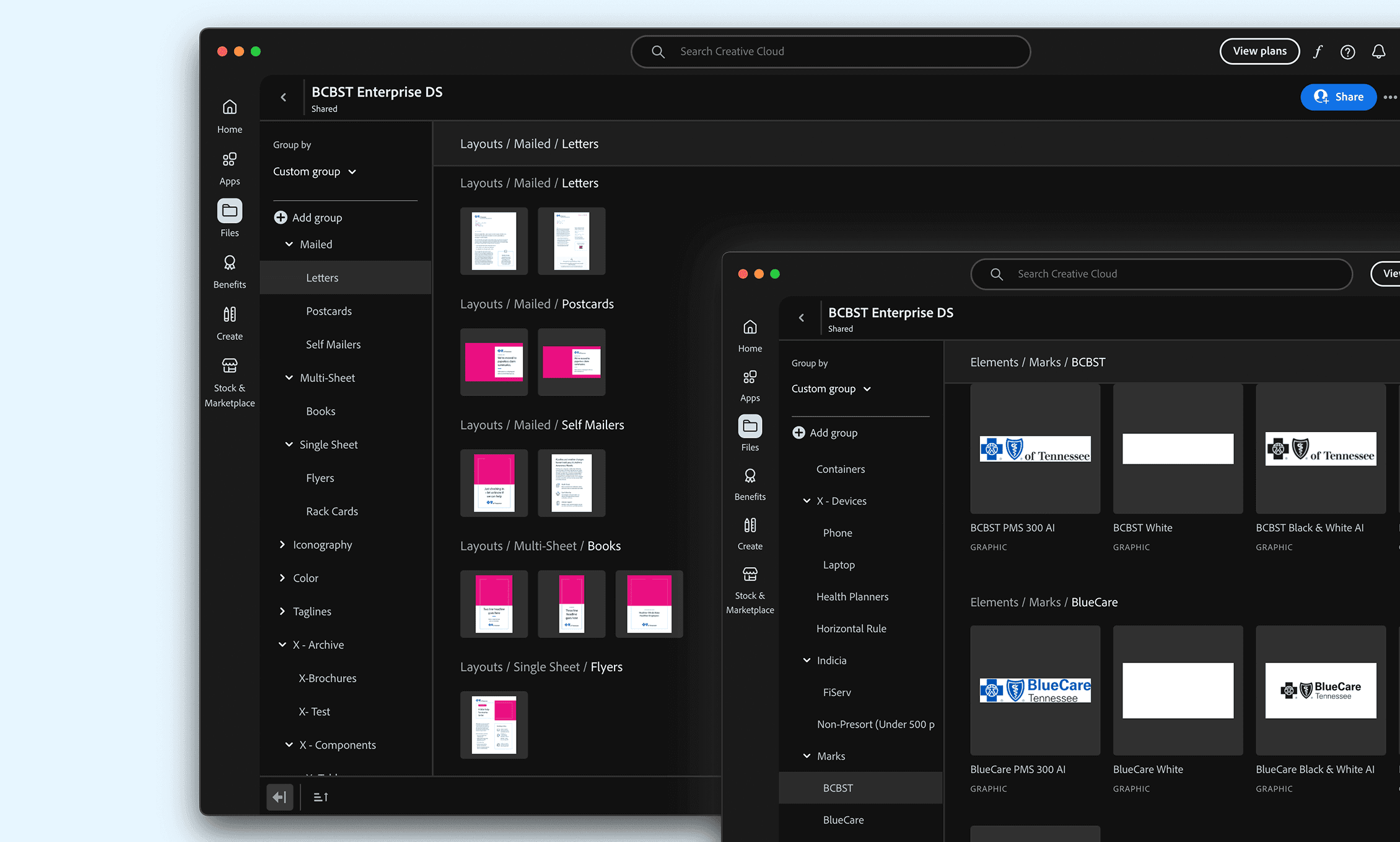
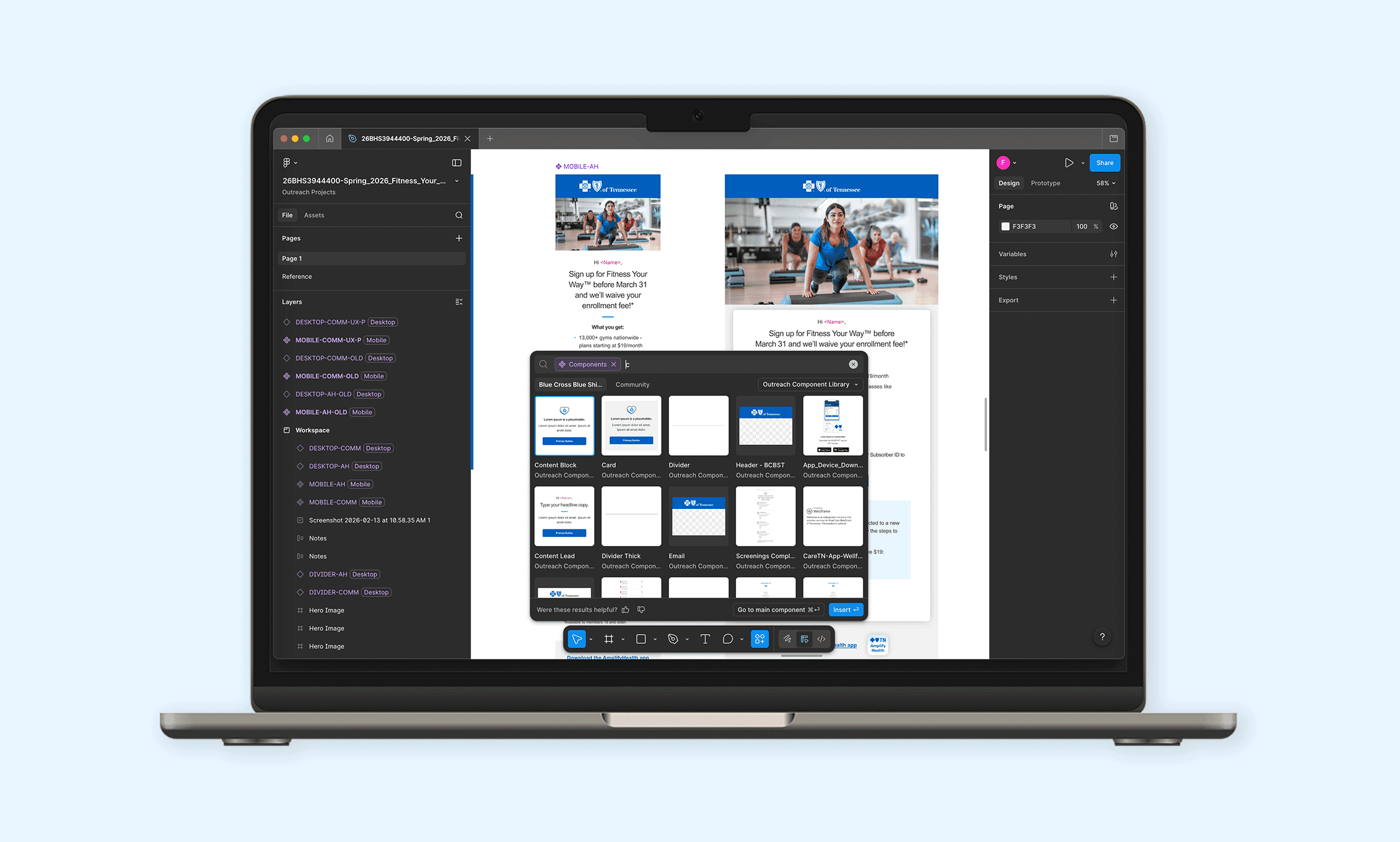
Sketch to Figma Outreach Library
Role:
Library builder, component & variant designer, team trainer
Tools:
Time frame:
2025-Present
Team / Partners:
Digital Experience, Brand Design, Digital Marketing-Outreach (Dev)
When InVision announced its shutdown at the end of 2024, our team needed to quickly transition from the Sketch/InVision/Craft Manager workflow to a new solution. With major digital‑marketing initiatives underway and production season approaching, our team needed a fully rebuilt, Figma‑based component library.
As the lead Sketch designer on my team, I volunteered to lead the Outreach migration — even though I had limited Figma experience at the time.
Starting point
Learning Figma to Lead the Migration
To get up to speed fast, I taught myself Figma’s design‑system practices through Figma Learn, tutorials, playground files, and extensive trial and error. I also partnered with the DX team to understand how their Global Foundations libraries were structured. Since the DX team was at capacity, I adapted their guidance into actionable steps for orchestrating the Outreach rebuild.
To meet a six‑week deadline, I created a milestone‑driven plan:
Audit existing Sketch symbols and layout patterns
Define component, variant and token needs
Create building blocks and level‑1 components
Build level‑2 components and outreach shell layouts
Test, gather feedback and refine
Document rules & train the Brand Design team
This blend of rapid upskilling, DX‑aligned decision‑making and structured planning formed the basis of the new Outreach library.
Problem solving
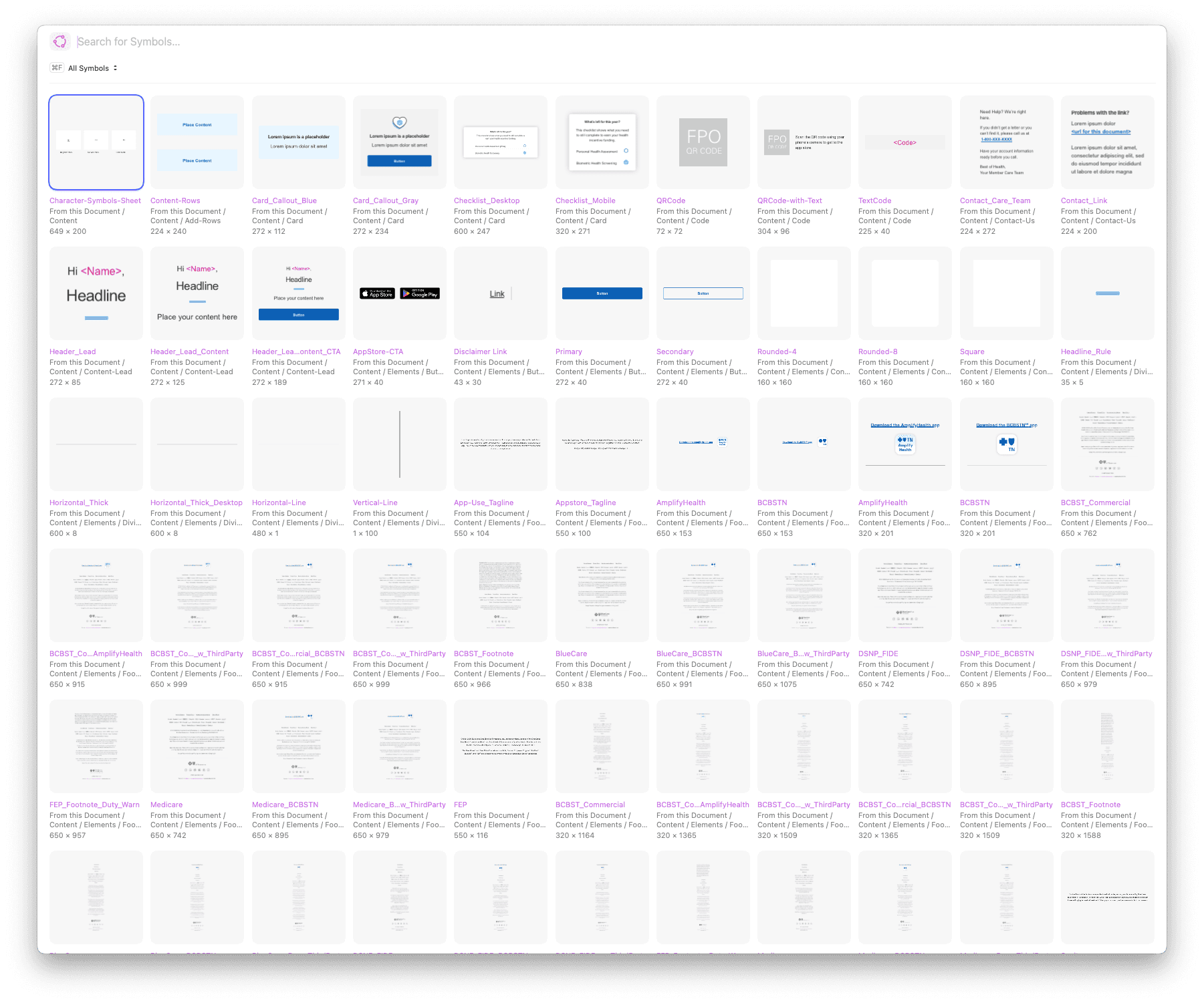
I began by auditing 287 Sketch symbols, identifying patterns to retire, combine or rebuild. Using enterprise foundations as the architectural baseline, I consolidated these into:
78 components
145 variants
87 building blocks
12 reusable templates
This structure reduced cognitive load for designers and aligned Outreach with the organization’s broader system ecosystem.
Implementation
I did not design the enterprise architecture — the DX team owned that.
My role was to implement the Outreach library within that architecture by:
Following established naming, spacing and token guidelines
Using foundation tokens for type, color, spacing and components
Designing variants based on DX system behavior rules
Ensuring components behaved predictably and aligned to existing enterprise patterns
This kept the Outreach library consistent with the organization's Apps, Portal and Public Site systems.

Results
73% reduction in system complexity
50% faster email production
Zero manual asset packaging — Dev self‑serves in Figma
Full alignment to enterprise Global Foundations architecture
Strong cross‑team confidence and adoption
Library now scalable, maintainable and structured for future growth